
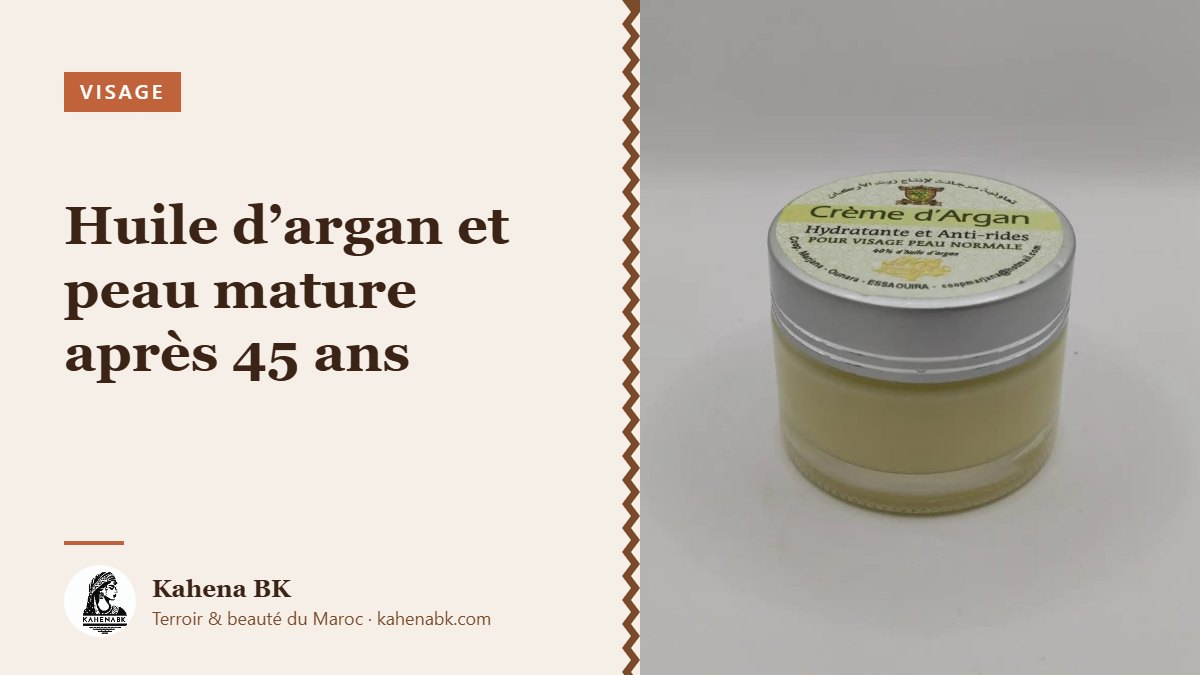
If you’ve been exploring natural alternatives for argan oil mature skin care, you’re not alone. As skin matures, it naturally loses elasticity, moisture retention, and resilience — and plant-based oils are increasingly studied as supportive daily ingredients. Argan oil, cold-pressed from the kernels of the Argania spinosa tree endemic to Morocco, stands out for its unique fatty acid profile and the clinical research that has been conducted on it.

What Happens to Skin as It Matures

Mature skin undergoes a series of structural changes: collagen production slows, the skin’s natural lipid barrier becomes less efficient, and antioxidant defenses weaken. These shifts translate to more visible fine lines, a tendency toward dryness, uneven tone, and reduced firmness. Choosing ingredients that address these mechanisms — rather than just sitting on the surface — becomes increasingly important with time.

This is why the composition of an oil matters as much as the oil itself. Not all plant-based oils are equal for mature skin, and understanding what is actually inside argan oil helps explain why it has earned such a consistent place in skin care formulations for this skin type.

The Composition of Argan Oil: Why It Matters for Older Skin

Argan oil’s value lies in what it contains:

  • Oleic acid (omega-9): typically makes up around 43–49% of argan oil’s fatty acid profile, supporting softness and helping the oil blend smoothly into skin
  • Linoleic acid (omega-6): around 29–36%, an essential fatty acid that helps maintain the skin’s lipid barrier — particularly relevant for mature skin that tends toward dryness
  • Tocopherols (vitamin E): argan oil is notably rich in gamma-tocopherol, a form of vitamin E with well-documented antioxidant activity
  • Squalene: a naturally occurring emollient also found in human sebum, contributing to skin feel and moisture balance
  • Polyphenols and phytosterols: minor but bioactive components associated with antioxidant and anti-inflammatory properties in cosmetic research

This combination makes argan oil a non-greasy, fast-absorbing oil that is suitable for daily use on mature skin — including the face, neck, and delicate eye area.

What Research Suggests About Argan Oil and Skin Elasticity

One of the most cited studies in this area was published in Clinical, Cosmetic and Investigational Dermatology in 2015. The researchers (Boucetta et al.) recruited 60 postmenopausal women and divided them into three groups: one using dietary argan oil, one applying cosmetic argan oil topically, and a control group. After 60 days, both argan oil groups showed statistically significant improvements in skin elasticity compared to the control group — with the topical group seeing notable changes in overall skin suppleness.

This study is particularly relevant because it focused specifically on postmenopausal women whose skin is especially affected by the hormonal changes that accelerate loss of elasticity and moisture. While a single study does not constitute definitive proof, it provides a meaningful scientific foundation for understanding why argan oil is so widely incorporated into mature skin care routines.

Antioxidant Protection and Oxidative Stress

A significant driver of visible skin aging is oxidative stress — the accumulation of free radical damage over time from UV exposure, pollution, and natural cellular processes. The tocopherols in argan oil are established free radical scavengers, and research on argan oil’s overall antioxidant capacity has consistently shown it to be among the more stable and active vegetable oils in terms of phenolic content and tocopherol concentration.

In the context of mature skin care, using an oil with meaningful antioxidant activity may help slow the pace of environment-related skin changes over time. It’s worth being clear that these effects are cosmetic — argan oil can support the skin’s surface appearance and barrier condition, not underlying biological aging processes.

How Argan Oil Supports the Skin Barrier

The linoleic acid in argan oil plays a direct role in reinforcing the skin’s lipid barrier, which tends to weaken with age. A compromised barrier leads to increased transepidermal water loss (TEWL) — the skin loses moisture through evaporation faster than it should, contributing to the tight, rough feel many people with mature skin notice. Applying a linoleic-rich oil helps replenish these surface lipids and support a more effective moisture seal.

This mechanism is not unique to argan oil — other linoleic-rich oils like rosehip and sea buckthorn work through the same pathway — but argan’s particular balance of oleic and linoleic acids makes it well-suited for most mature skin types, including those that veer toward sensitivity.

Comparing Argan Oil to Other Oils for Mature Skin

OilLinoleic AcidOleic AcidVitamin EBest For
Argan Oil~34%~46%High (gamma-tocopherol)Elasticity, barrier, antioxidant
Rosehip Oil~40–50%~15%ModeratePigmentation, fine lines
Marula Oil~7%~73%ModerateVery dry, mature skin
Sea Buckthorn~35%~25%Very highDamaged, reactive skin

Argan oil sits at a practical midpoint: rich enough in oleic acid to feel nourishing without being heavy, and sufficient in linoleic acid to offer genuine barrier support. This balance suits mature skin that can veer between dryness and sensitivity — a combination that rules out many more oleic-heavy oils.

How to Use Argan Oil on Mature Skin

For consistent, effective results:

  • Morning: Apply 3–5 drops to clean, slightly damp skin before sunscreen. The lightweight texture absorbs quickly without interfering with SPF
  • Evening: Use as the final step after any serums, pressing a few drops into cheeks, forehead, and neck. The skin’s overnight repair phase makes this an effective time for oil application
  • Eye area: A single drop gently pressed around the orbital bone — the skin here is thinner and benefits from the protective, moisturizing layer
  • Body: Massage into elbows, knees, and the chest area while skin is still slightly warm after bathing

You’ll find pure Moroccan argan oil in the KAHENA BK shop, sourced directly from Moroccan women’s cooperatives and cold-pressed to preserve its full nutrient profile. For a deeper look at how we source our argan oil and why it matters, read our story — rooted in the heritage of Amazigh women and the argan forests of southern Morocco.

Tips for Choosing Quality Argan Oil

Not all argan oil delivers the same results. For mature skin care, look for:

  • Cold-pressed extraction: heat processing degrades tocopherols and reduces the oil’s antioxidant activity
  • Dark glass bottle: light accelerates oxidation and shortens shelf life
  • 100% pure: no added silicones, fragrances, or filler oils that dilute the active components
  • Subtle, nutty scent: excessive refining often strips the natural aroma along with beneficial compounds
  • Moroccan origin: argan trees (Argania spinosa) grow naturally only in Morocco’s Souss-Massa region — any other origin is misleading

For a comprehensive guide to what distinguishes authentic Moroccan argan oil from diluted or mislabeled products, the Complete Guide to Moroccan Argan Oil covers authenticity markers, how to read labels, and what to look for when buying.

Frequently Asked Questions

Can argan oil be used on very sensitive mature skin?

Generally, yes. Argan oil has a low comedogenic rating and is well-tolerated by most skin types, including sensitive and reactive skin. Its oleic and linoleic acid profile closely resembles the skin’s own natural lipid composition, which tends to reduce irritation risk. As always, a patch test on a small area is sensible before full-face use, particularly if your skin has reacted to other oils in the past.

How long before I notice results with argan oil on mature skin?

Most people report a visible improvement in skin softness and hydration within 2–4 weeks of consistent daily use. The Boucetta et al. study published in Clinical, Cosmetic and Investigational Dermatology (2015) measured improvements in skin elasticity over a 60-day period, which suggests that patience with the process matters — meaningful changes in elasticity and firmness take time.

Should argan oil replace a moisturizer for mature skin?

Oils and moisturizers work differently: moisturizers typically contain humectants (like hyaluronic acid or glycerin) that draw water into the skin, while oils create a semi-occlusive layer that slows moisture loss. Using both together — humectant moisturizer first, oil on top to seal — is often more effective for mature skin than either product alone.

Is argan oil suitable for the skin around the eyes?

Yes. Argan oil is frequently used in the periorbital area because of its lightweight texture, non-comedogenic profile, and absence of fragrances that could irritate this sensitive zone. Use a small amount — typically one drop — pressed gently around (not into) the eye. It pairs well with a separate eye treatment if you use one.

Khadija Ait Lahcen is a Moroccan beauty enthusiast and writer with a passion for traditional cosmetic ingredients and their modern applications. She writes for KAHENA BK about argan oil, hair care, and the heritage of Moroccan beauty rituals.


Leave a Reply

Your email address will not be published. Required fields are marked *